Accuracy
Follow small commands with predictable valve movement.

Follow small commands with predictable valve movement.
Resist unwanted shaft movement as valve loads change.
Small, repeatable valve movements start with the complete control valve.
At the heart of every complete control valve is the actuator. Precise control depends on how reliably it turns a control signal into valve movement-even the best valve and positioner cannot compensate for poor actuator performance.
A good control valve turns small command changes into predictable valve movement. The positioner’s indication alone is not enough: the valve stem must actually follow the command. BenchMark, Black Diamond Engineering’s control-valve diagnostic system used by International Paper to evaluate control valves, measures valve-stem travel independently of positioner indication. These graphs show the tested assembly responding to small steps, signal reversals and changes across its travel.
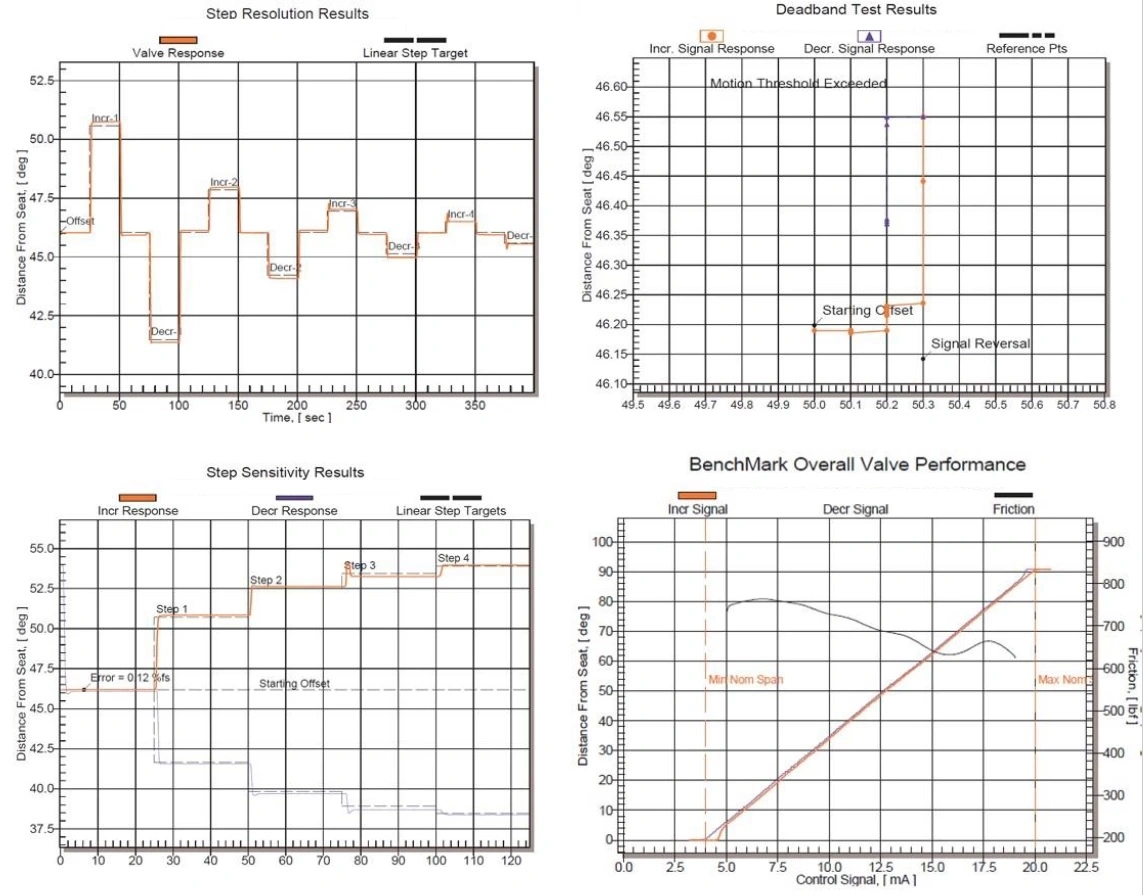
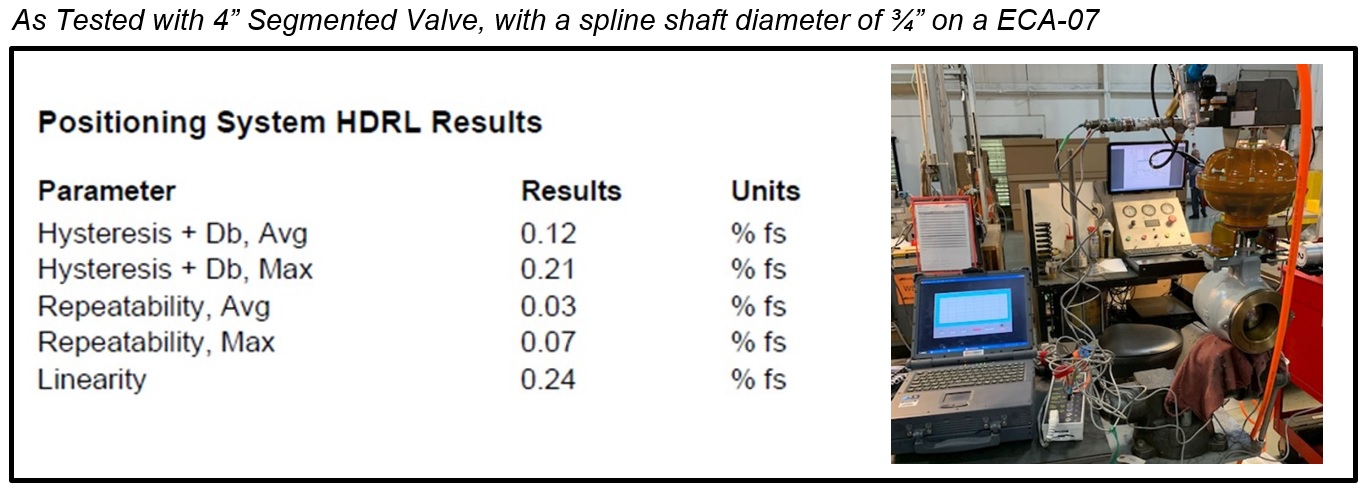
Precise control-valve positioning and small-signal response
Stable control-valve positioning under changing loads
At an ethanol plant, Easytork supplied actuation for three initial modulating control valves in 2020, covering flow and level control.
The technician reported quick, straightforward loop tuning, responsive setpoint changes and rapid recovery from process disturbances in the flow-control applications.
The plant has continued expanding its use of Easytork actuation.
Easytork’s application experience with International Paper began with testing at its Rome, Georgia mill in December 2019. Easytork subsequently supplied control-valve actuation and developed an ongoing record of repeat business.
The acceptance criteria documented in these evaluations required average and maximum HDL error below 3% of full stroke and valve response to a 0.5% signal change, with both requirements needing to pass. HDL combines hysteresis, deadband and lag. These were application-specific acceptance criteria.
Accuracy and stability depend on the complete valve assembly.
Compare command with actual valve-stem travel, and review the mounting and drive connection.
Tell us about your control valve application and the small movements or process variation you'd like to improve.
Share the process conditions, available air, operating range and required fail action so we can review the complete valve package.
Discuss my control applicationinfo@easytork.com+1 (314) 266-6880