Temperature
−4 to 176°F (−20 to 80°C).

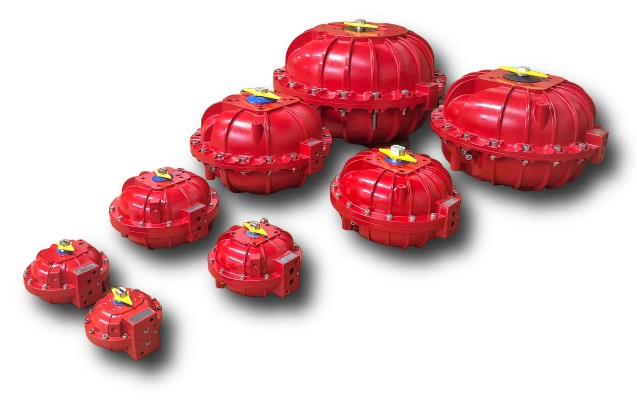
One quarter-turn actuator platform, with model-specific mounting and configurable operating functions.
| Model | 3 bar | 4 bar | 5 bar | 5.5 bar | 6 bar | 7 bar |
|---|---|---|---|---|---|---|
| EVA-0411 | 21.1 | 28.1 | 35.1 | 38.6 | 42.1 | 49.2 |
| EVA-0514 | 38.1 | 51.8 | 65.4 | 72.1 | 78.7 | 91.6 |
| EVA-0717 | 84.5 | 119.5 | 146.7 | 158.7 | 170.8 | 193.4 |
| EVA-1022 | 170.6 | 233 | 295 | 326.2 | 355.9 | 417.1 |
| EVA-1227 | 367 | 496 | 622 | 683 | 748 | 875 |
| EVA-1436 | 631 | 862 | 1090 | 1212 | 1330 | 1550 |
| EVA-1646 | 1367 | 1829 | 2299 | 2537 | 2768 | 3207 |
| EVA-1646 Tandem | 2734 | 3658 | 4598 | 5074 | 5536 | 6414 |
| Model | 3 bar | 4 bar | 5 bar | 5.5 bar | 6 bar | 7 bar |
|---|---|---|---|---|---|---|
| EVA-0411 | 13.5 | 18 | 22.5 | 24.7 | 27 | 31.5 |
| EVA-0514 | 24.7 | 34 | 43.1 | 47.4 | 52.1 | 60.4 |
| EVA-0717 | 58.3 | 78.8 | 99.9 | 110.7 | 120.5 | 138 |
| EVA-1022 | 114 | 157.6 | 200.2 | 221.1 | 241.6 | 284 |
| EVA-1227 | 247 | 336 | 419 | 465 | 510 | 588 |
| EVA-1436 | 415 | 560 | 727 | 810 | 886 | 1044 |
| EVA-1646 | 900 | 1220 | 1536 | 1698 | 1867 | 2163 |
| EVA-1646 Tandem | 1800 | 2440 | 3072 | 3396 | 3734 | 4326 |
| Model | 40 psi | 50 psi | 60 psi | 70 psi | 80 psi | 90 psi | 100 psi |
|---|---|---|---|---|---|---|---|
| EVA-0411 | 171 | 214 | 257 | 300 | 343 | 386 | 429 |
| EVA-0514 | 310 | 392 | 475 | 559 | 640 | 720 | 799 |
| EVA-0717 | 688 | 889 | 1094 | 1253 | 1409 | 1563 | 1686 |
| EVA-1022 | 1388 | 1759 | 2133 | 2520 | 2895 | 3258 | 3636 |
| EVA-1227 | 2986 | 3762 | 4540 | 5314 | 6062 | 6847 | 7628 |
| EVA-1436 | 5134 | 6508 | 7890 | 9312 | 10758 | 12174 | 13512 |
| EVA-1646 | 11123 | 13931 | 16742 | 19641 | 22519 | 25337 | 27958 |
| EVA-1646 Tandem | 22245 | 27862 | 33484 | 39282 | 45038 | 50674 | 55915 |
| Model | 40 psi | 50 psi | 60 psi | 70 psi | 80 psi | 90 psi | 100 psi |
|---|---|---|---|---|---|---|---|
| EVA-0411 | 110 | 137 | 165 | 192 | 219 | 247 | 274 |
| EVA-0514 | 201 | 256 | 312 | 369 | 420 | 477 | 527 |
| EVA-0717 | 474 | 598 | 721 | 853 | 983 | 1103 | 1203 |
| EVA-1022 | 928 | 1184 | 1443 | 1710 | 1963 | 2211 | 2476 |
| EVA-1227 | 2010 | 2541 | 3076 | 3580 | 4127 | 4668 | 5126 |
| EVA-1436 | 3377 | 4250 | 5126 | 6211 | 7190 | 8110 | 9101 |
| EVA-1646 | 7323 | 9241 | 11167 | 13123 | 15072 | 17090 | 18856 |
| EVA-1646 Tandem | 14646 | 18481 | 22335 | 26245 | 30143 | 34179 | 37713 |
Output torque excludes a safety factor. Double-acting torque is constant through 0–90°. Fail-safe values are minimum torque at the end of stroke. Metric and imperial views use their respective published pressure grids.
For lower-pressure duty, explore low-pressure solutions or request application sizing.
See the fail-safe torque chart and how stored-air torque changes through the stroke and with charged supply pressure.
Read the fail-safe energy and torque guide →−4 to 176°F (−20 to 80°C).
VDI/VDE 3845 and NAMUR interfaces.
AWWA C541 compliant, as stated in the published EVA specifications.
Published coverage: two years / two million cycles. Confirm applicable terms with Easytork.
Specifications, dimensions and installation instructions.
Need CAD or a 3D model? Email Easytork for CAD / drawings →
Original Easytork demonstrations supplement-not replace-the current model-specific installation and maintenance instructions.
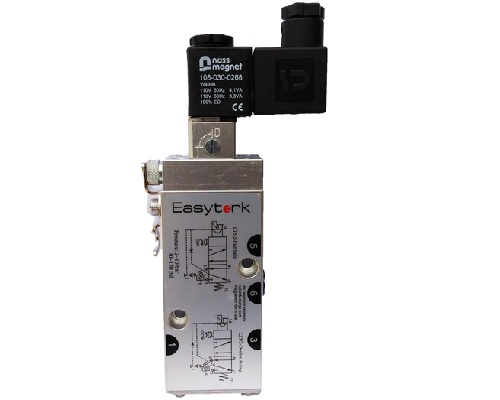 ESVEasytork solenoid valveProduct details →
Double-acting
or fail-safe
Fail-open / fail-close
Double-acting
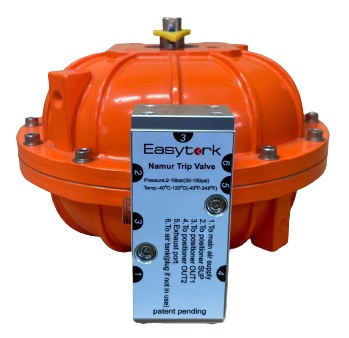 Positioner + NTVFail-safeProduct details →
Understand how ESV, EPV and NTV route the command and stored-air fail-safe energy.
Read the reservoir-control engineering guide →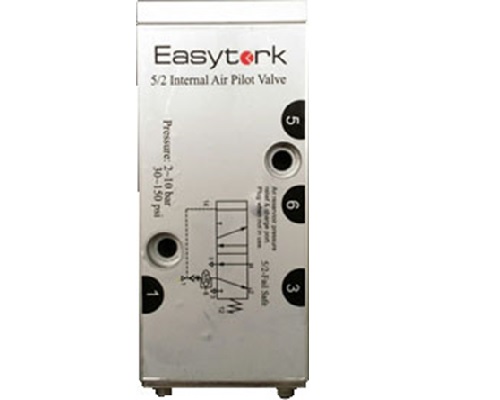 EPV